
Comedy Is a Craft:
Tim Searle on Forty Years in British Animation

This is a digest of an episode of Animated Conversations, a podcast I hosted. This episode features animation director Tim Searle and covers his remarkable career in British comedy animation. The conversation has been condensed and summarised here for those who want the key insights without the full runtime.
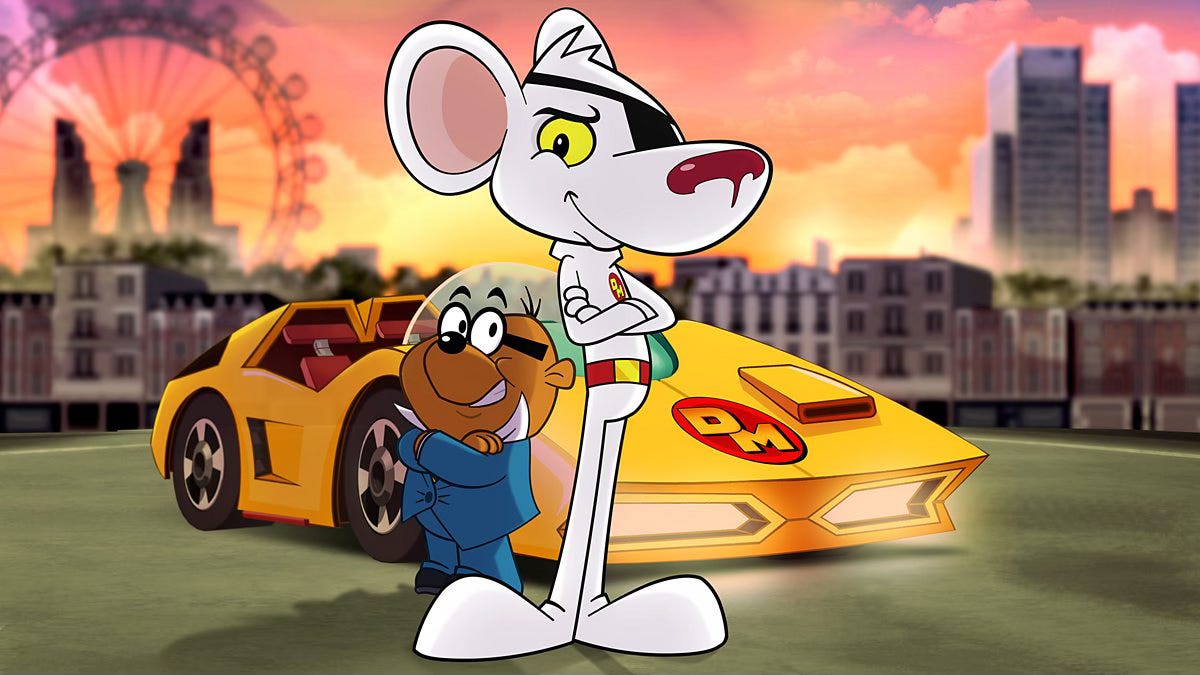
Tim Searle has spent most of his working life making people laugh through animation. He’s directed on Dennis and Gnasher, the animated Mr. Bean series, Have I Got News for You, Danger Mouse, and most recently served as series director on Toad and Friends, the Wind in the Willows adaptation. In this conversation with Andy Williams, he talks about where his instinct for comedy came from, how he got started, and what he’s learned about making animation that genuinely lands.
Comedy as a Way of Life
Before anything else, Tim is clear that comedy isn’t just his profession — it’s how he processes the world. He traces it back to childhood memories of Morecambe and Wise, Steptoe and Son, and Citizen Smith, and the particular joy of watching something so funny that everyone in the room — including his slightly disapproving grandfather — couldn’t help but react. That sense of shared laughter as something genuinely useful, something that brings people together and smooths difficult situations, has underpinned his approach ever since.
He’s also emphatic that good comedy has to be earned. The classic slapstick moments — Partridge with a nail through his foot, trying to hold it together through a presentation — only work because you’ve been walked through enough context to feel invested. “You can’t have that stuff all the time,” he says. “You need to appreciate the rhythm.”
From Photography to Animation: An Accidental Path
Tim studied art at school, did a foundation course at High Wycombe (trying everything, falling briefly in love with photography), and then went to Farnham to study documentary photography. The romance didn’t last. He grew frustrated with a culture that rewarded how articulately you could talk about your work rather than whether the work itself communicated. The animation students down the corridor, he noticed, were having considerably more fun telling actual stories.
He blagged his way onto the animation course, finished his degree that way, and never looked back.
Terrific Films: Starting a Business Straight Out of College
Rather than taking the conventional route of working for someone else first, Tim set up his own company — Terrific Films — straight after graduating, with help from the Prince’s Trust. The name was a deliberate act of provocation: he wanted bank managers to have to say it out loud. It ran for twenty years.
His early break came through the animated title sequences and graphics for Have I Got News for You. He found himself working in the same room as Angus Deaton and the writers as the script came together, effectively functioning as a test audience — if they could make Tim and his colleagues laugh, that was a good sign. It was, he says, a brilliant education in how comedy is assembled.
From there, work on the sketch show Absolutely followed, and then a gradual transition into longer-form narrative animation.
2DTV and the Problem of Speed
One of Tim’s most significant contributions to British animation was helping pioneer the fast-turnaround topical comedy format through 2DTV for ITV. The conventional wisdom had always been that animation was simply too slow to respond to the news cycle. Tim helped prove that wrong — his company was producing 12.5 minutes of finished animation in the four days before each transmission.
The show ran for five series, and its pilot went out after a Liverpool European match, inheriting a substantial audience. At the time, Tim recalls, they hadn’t quite registered that it might not be broadcast at all. The naivety, he now acknowledges, was probably an asset.
It was also during this period that George Michael got in touch. A fan of the show, he commissioned an animated video for Shoot the Dog — and turned out to be, Tim says, a thoughtful and perceptive collaborator who noticed details and made the work better.
The Principles Behind Good Comedy Animation
When asked what he’s looking for when he approaches new material, Tim returns to a handful of consistent principles:
Characters you can root for. Not just like — root for. The relationships between characters need to feel believable, and the audience has to understand why these people would actually spend time together. On Dennis and Gnasher, he pushed hard on the question of why a cool kid with a cool dog would bother with the other characters at all. The answer matters, because if it doesn’t make sense, the audience quietly checks out.
Relatable scenarios with unexpected outcomes. The setup needs to earn the punchline, and the situations need to feel grounded in recognisable experience. Tim draws a line from Laurel and Hardy (he screened a 1932 short for local schoolchildren and it still got laughs) through to Alan Partridge — the comedy in both cases works because you understand the character’s predicament before the disaster hits.
Comedy lives in the wide shot. This is one of Tim’s most consistent convictions, derived partly from Rowan Atkinson’s observation that “life is a comedy in the wide, a tragedy in close-up.” Reaction shots matter. What makes Toad’s outrageous pronouncements funny in Toad and Friends isn’t just what he says — it’s seeing how everyone around him processes it. Wide shots are expensive in animation (more to move, more to draw), but Tim fought for them throughout his career because the comedy simply doesn’t work as well without them.
Don’t patronise children. By the time children are six or seven, they’ve watched Pixar. They’re smart. Talking down to them is a mistake, and they’ll sense it.
Working with Rowan Atkinson on Animated Mr. Bean
The Mr. Bean animated series gave Tim what he describes as a forensic education in comedy timing. Atkinson, he explains, is a comedy technician in the truest sense — deeply analytical about why something is or isn’t funny, interested in the mechanics, always asking whether the logic holds. His view was that if an audience is questioning the plausibility of a situation, they’ve already stepped out of it and stopped laughing.
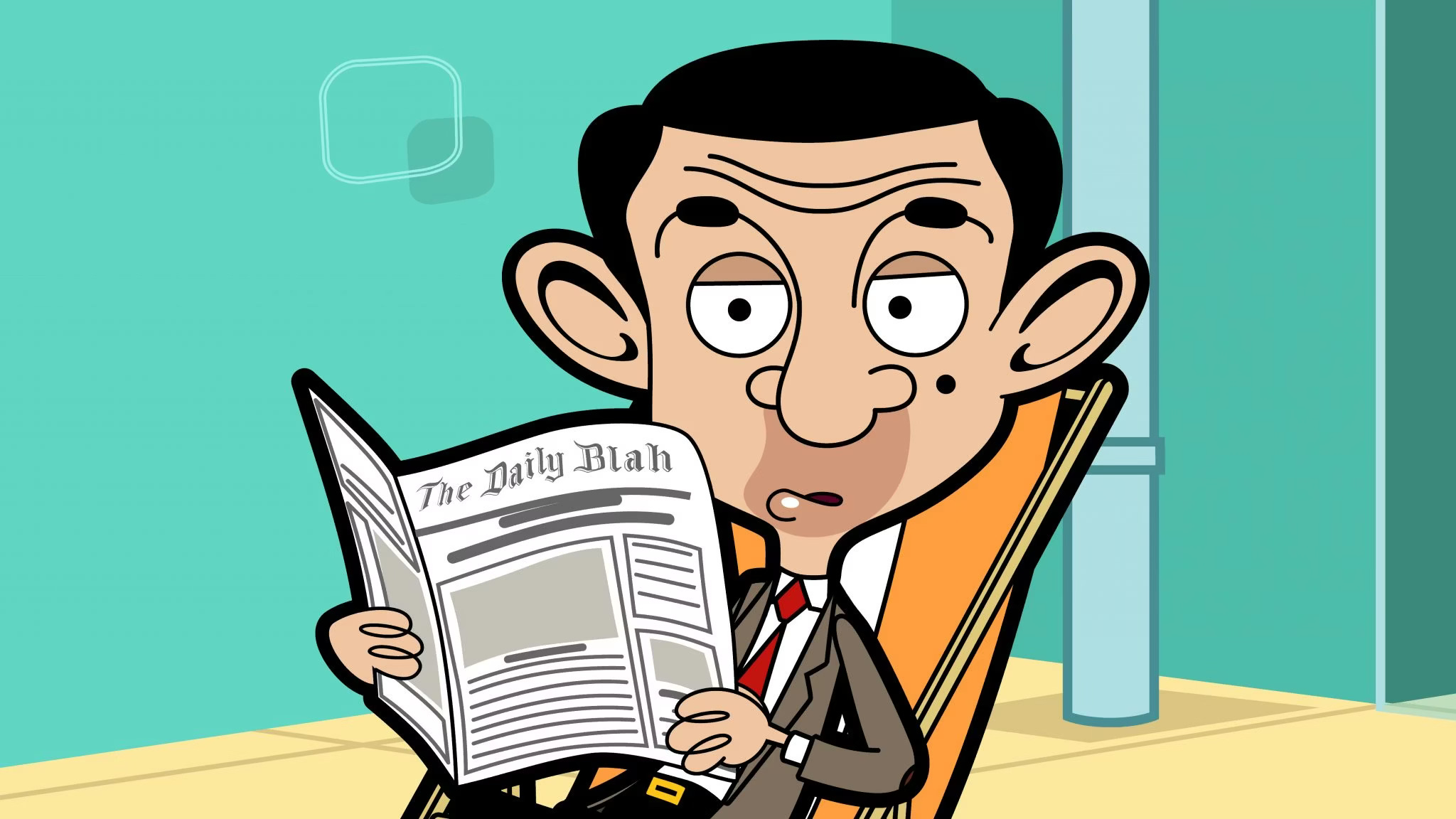
The production approach was built around getting Atkinson’s input at key stages — storyboards, early blocking — rather than at the end when changes would be prohibitively expensive. Tim is characteristically pragmatic about this: getting a brilliant person’s notes matters less than timing them correctly.
Casting Ade Edmondson as Toad
Tim’s account of how Adrian Edmondson came to play Toad in Toad and Friends involves a degree of diplomatic discretion about the previous casting choice. What he will say is that he made the case for Edmondson — that the character needed someone with genuine comedic gravitas, and that Edmondson’s familiarity with the source material (he’d read Wind in the Willows to his grandchildren) meant he came to the role already understanding who Toad was.
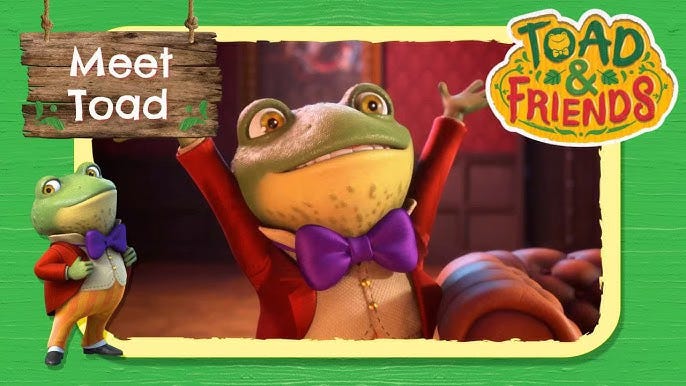
The collaboration worked because Edmondson, like Atkinson, is a comedy technician who enjoys the process. He’d take direction, push back when something didn’t feel right, and when a different approach landed, he’d laugh generously — which is, Tim notes, exactly what you want from a performer you’re directing.
Directing Voice Performances: Don’t Bark if You’ve Got a Dog
Tim’s approach to voice direction is grounded in a phrase he borrowed from his father: “you don’t have a dog and bark yourself.” His job is to give performers the context they need, explain the bigger picture of the scene, and then get out of the way. Telling an actor exactly how to deliver a line tends to produce something technically correct and creatively inert.
What he’s looking for is surprise — performances that go somewhere he hadn’t anticipated. The role of the director in the session is to hold the context and redirect when a performance isn’t serving the story, not to demonstrate what the performance should sound like.
The Advantage Animation Has Over Stand-Up
One thread running through the conversation is Tim’s genuine admiration — tinged with slight relief — at the fact that he works in animation rather than live performance. He watched Dominic Holland (Tom Holland’s father) do warm-up for Have I Got News for You and noticed that the same material would land brilliantly one week and die the next. There are variables in live performance that you simply can’t control.
Animation is different. If a joke isn’t working, you can go back to the animatic and try something else. You get to think about the music, the sound design, the timing, the cut. You have multiple attempts to make a moment land, at every level of production. It’s a privilege, he thinks, that animators don’t always fully appreciate.
Toad and Friends, Unreal Engine, and the Environmental Case for New Technology
Toad and Friends was produced using Unreal Engine — the games engine more commonly associated with first-person shooters — as a rendering tool, rather than traditional CG rendering farms. Tim’s enthusiastic about what this means for smaller studios: the production reportedly saved 88 tonnes of CO₂ compared to conventional methods, and the render farm was a rack of office computers rather than a warehouse of machines consuming the power equivalent of a city district.
He sees this as a genuine liberation for smaller teams. High-quality CG no longer requires industrial-scale infrastructure. The implications for independent animation studios are, he thinks, significant.
The Throughline
What emerges across the whole conversation is a coherent philosophy: comedy is a craft, not an inspiration. It requires preparation, patience, and a consistent willingness to ask why something isn’t working rather than defending it. The wide shot matters. The reaction matters. The character relationships need to make sense. And the work of a director is mostly to create the conditions in which talented people can do their best work — and then let them.
As someone at the production company where Tim had just finished working put it: he’s the glue. He’s apparently thinking about getting that on a T-shirt.
Key Takeaways
Comedy has to be earned. Big comic moments only land if the audience has been given enough context to care. Setup isn’t padding — it’s the work.
Root for your characters, don’t just like them. Character relationships need internal logic. If the audience can’t understand why these people are together, they’ll quietly disengage.
Shoot wide. Reaction shots carry the comedy. The audience needs to see how others in the scene are processing what’s just happened — a close-up on the joke often kills it.
Don’t talk down to children. Young audiences have high standards. They’ve seen Pixar. Meet them there.
Time your collaborators’ input carefully. Getting notes from a Rowan Atkinson matters much less than getting them at the right stage of production, before changes become expensive.
Give performers context, not instructions. The director’s job in a voice session is to explain the world of the scene, then let the actor find it. Over-directing produces technically correct, creatively flat performances.
Animation’s great advantage is iteration. Unlike stand-up, you can go back. The music, the timing, the cut — every layer is another opportunity to make a joke work. That’s a privilege worth using.
Simpler can be funnier. As technology improves, there’s a temptation to chase visual complexity. A stylised or demanding look can distract an audience from the joke. Sometimes a simple gag told simply is the right call.
New tools are changing what’s possible for small studios. Unreal Engine is making high-quality CG accessible without the infrastructure costs — and the environmental ones — of traditional render farms. That matters for independent animation
Tim Searle’s website
https://www.timsearleanimation.com